Language Courses Online in 2026: How to Become Fluent Faster
Language courses online have transformed how people learn to speak, read, and think in a new language in 2026. Instead of memorizing lists from a dusty textbook, you can now practice with native-level instructors, get instant corrections, and study on your own schedule. If you want to become conversational in English, Arabic, French, or any other language, this guide shows you exactly how modern online language learning works and how to pick a program that delivers real fluency.
Fluency is not about talent. It is about consistent, structured practice with feedback, and that is precisely what quality language courses online are built to provide.
Why Language Courses Online Beat Old-School Methods
Traditional language classes often move too slowly, focus on grammar drills, and leave you unable to hold a real conversation. Online courses flip that model. They prioritize speaking, listening, and practical usage from day one.
According to the Council of Europe’s CEFR framework, real proficiency is measured by what you can do with a language, not how many rules you memorize. Modern online courses align with this outcome-based approach.
- More speaking time: Live sessions and voice tools push you to talk early.
- Immediate correction: Instructors fix pronunciation and grammar in real time.
- Immersive content: Videos, podcasts, and reading built into the course.
- Flexible pacing: Revisit tricky lessons without holding back a whole class.
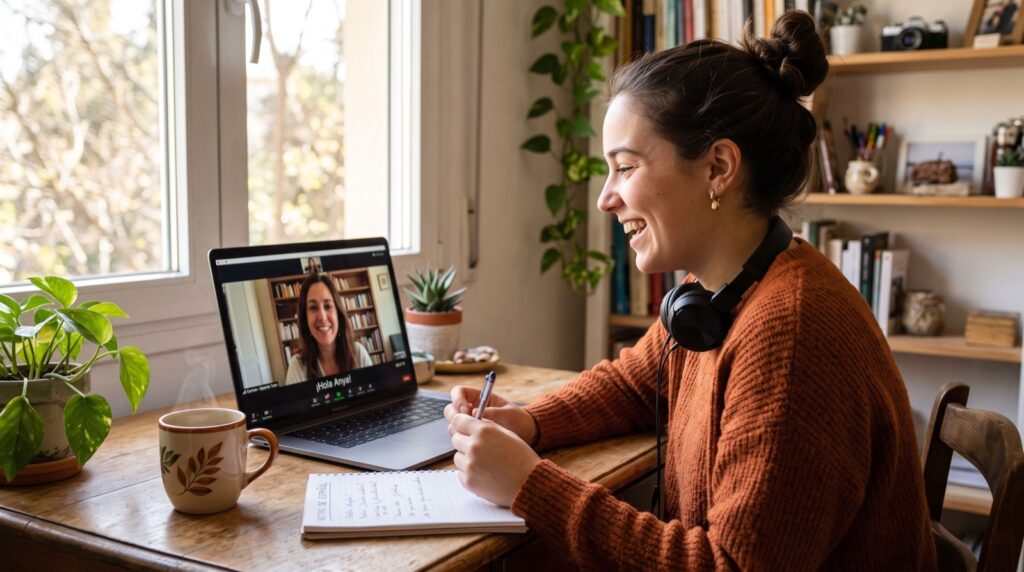
Serious learners often combine a course with structured language courses online that include live instructor feedback, because speaking practice with a human is what turns knowledge into fluency.
How Long Does It Take to Learn a Language Online?
Timelines depend on the language, your starting level, and your weekly effort. Still, realistic benchmarks help you set goals and stay motivated.
| Goal Level (CEFR) | What You Can Do | Approx. Study Hours |
|---|---|---|
| A1–A2 | Basic conversations, everyday phrases | 80–180 hours |
| B1–B2 | Confident conversation, work use | 350–600 hours |
| C1–C2 | Near-fluent, professional mastery | 700–1000+ hours |
Study just one focused hour a day, and you can reach conversational ability within months, not years. Consistency is the multiplier.
What to Look for in the Best Language Courses Online
Not all programs deliver. Use this checklist before you enroll so your time and money produce results.
- Speaking-first design. The course should get you talking in the first week.
- Qualified instructors. Native or near-native teachers with real teaching experience.
- Structured curriculum. A clear progression from basics to fluency.
- Feedback loops. Corrections on pronunciation, grammar, and usage.
- Cultural context. Real-world usage, idioms, and etiquette, not just textbook lines.
When you want personal accountability, pairing a course with one-on-one online tutoring accelerates progress dramatically. A dedicated tutor targets your exact weak points.
Proven Techniques to Learn Faster
Practice speaking out loud daily
Even five minutes of talking to yourself, describing your day, or repeating dialogues builds muscle memory. Fluency lives in your mouth, not just your notebook.
Use spaced repetition for vocabulary
Review new words after one day, three days, and a week. This spacing locks vocabulary into long-term memory far better than cramming.
Immerse yourself between lessons
Watch shows, listen to music, and change your phone language. Surrounding yourself with the language multiplies every hour of formal study.
Before enrolling, it also pays to compare providers and read honest reviews from trusted professionals who have taken similar programs.
Common Mistakes Language Learners Should Avoid
Many learners plateau not because they lack ability, but because they repeat the same avoidable errors. Sidestep these and your progress accelerates.
- Studying grammar in isolation: Rules without practice produce silent readers, not speakers. Always tie grammar to real sentences you say out loud.
- Fear of mistakes: Every fluent speaker made thousands of errors first. Speaking imperfectly is how you improve.
- Passive consumption: Watching shows helps, but only active output builds fluency. Repeat lines, shadow speakers, and respond aloud.
- Inconsistent practice: Skipping days breaks momentum. Fifteen minutes daily beats three hours once a week.
Here is a tip most learners discover too late: keep a personal phrasebook of sentences you actually need for your life, then practice those first. Learning “how do I renew my visa” matters more than memorizing abstract vocabulary lists.
How to Stay Motivated Until You Reach Fluency
Language learning is a marathon, and motivation naturally dips. Systems, not willpower, keep you going through the middle stretch.
Set small, visible milestones
Celebrate reaching each CEFR level or completing a course module. Small wins keep the long journey rewarding and concrete.
Find a real reason to speak
Connect the language to something you love: travel, films, work, or family. A meaningful purpose sustains effort far longer than grades alone.
Join a community
Practice partners, tutor sessions, and language groups add accountability and make learning social instead of lonely. Human connection turns study into a habit you enjoy.
Frequently Asked Questions
Can I really become fluent with language courses online?
Yes. With consistent speaking practice, qualified instructors, and daily immersion, online learners reach conversational and even professional fluency every year.
How many hours a week should I study a language online?
Five to seven focused hours per week produces steady, visible progress. Daily short sessions beat one long weekly session for memory and confidence.
Are online language courses better than apps alone?
Apps are great for vocabulary and habit-building, but courses with live instructors provide correction and conversation that apps cannot fully replace.
Which language is easiest to learn online in 2026?
It depends on your native language, but languages with abundant online content, like English, tend to be easier because immersion resources are everywhere.
Conclusion: Start Speaking a New Language Today
Language courses online in 2026 give you the fastest, most flexible path to fluency, combining expert instruction, immersive content, and real speaking practice. Choose a speaking-first program with qualified teachers, add a tutor for accountability, and commit to daily practice. Do that, and a new language becomes a genuine part of your life within months.
Ready to speak with confidence? Explore structured language courses online, book your first session, and start your fluency journey this week.