
Drive-Thru Solutions in 2026: Smart Queuing That Keeps Cars Moving
A modern drive-thru solution is where speed, technology, and customer loyalty meet. In 2026, drivers judge a restaurant or pharmacy by one brutal metric: how long they sit in the lane. A slick drive-thru solution shaves seconds off every order, and those seconds decide whether the car in the mirror pulls in or drives past. This guide breaks down the technology, the layout science, and the smart queuing that now powers the fastest lanes in the Gulf.
We have helped service brands rebuild their lane flow from the ground up, and the lesson is always the same. The winning sites do not just take orders faster; they manage the whole queue intelligently, from the first menu board to the final handoff window.
Why a Drive-Thru Solution Matters More Than Ever
Consumer habits locked in during the last few years never fully reversed. Drivers still prefer the convenience of ordering without leaving the car, and demand for contactless, fast service keeps rising. A sluggish lane now costs real revenue, because abandoned cars are lost sales you never even see.
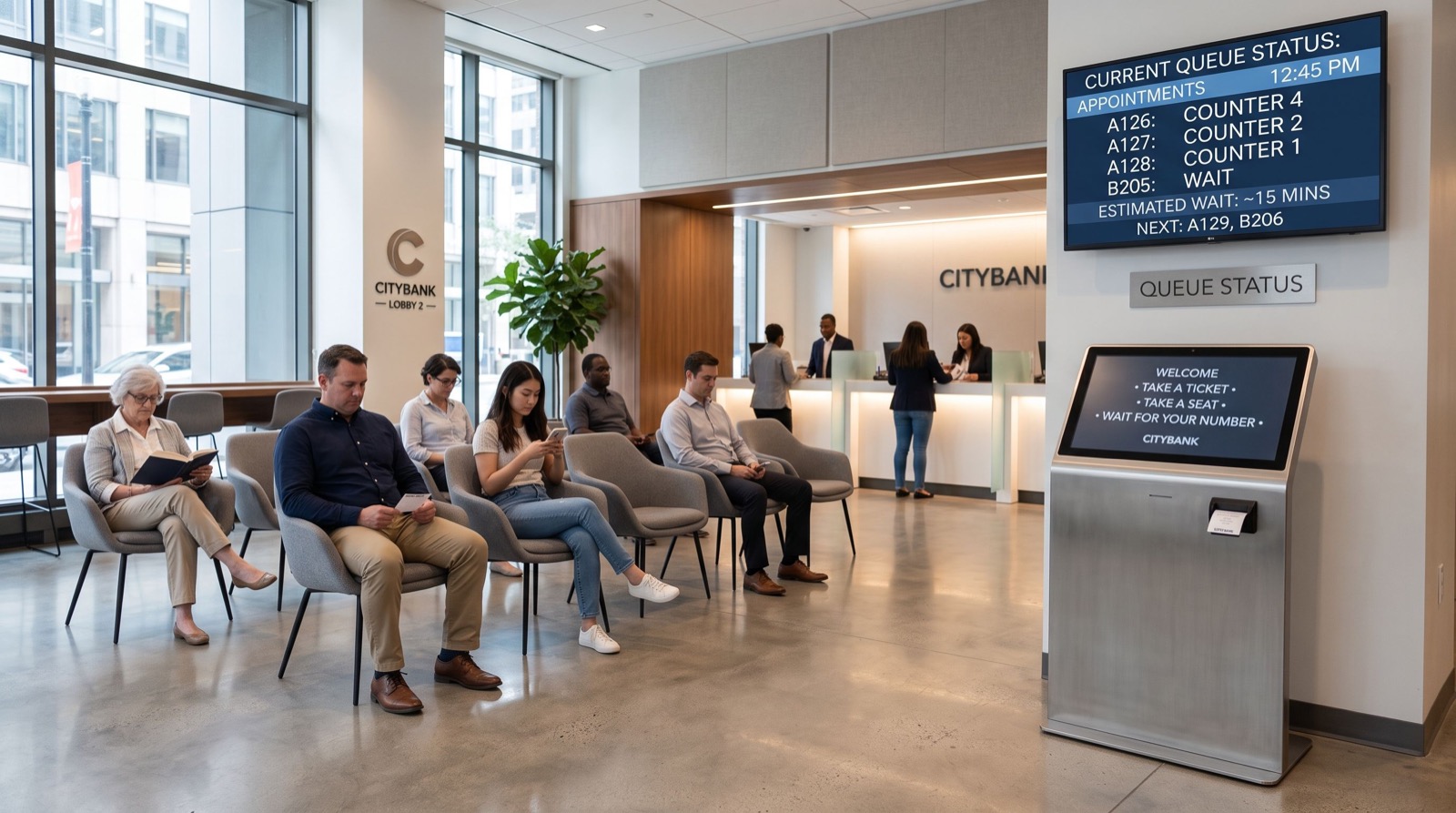
The same discipline that powers a queue management system in saudi arabia applies on the forecourt. You are still managing a line of people who want to be served quickly and fairly; the only difference is that the people are sitting in vehicles. Treat the lane as a measurable queue and the improvements follow.
The cost of a slow lane
Every extra thirty seconds per car compounds across a busy evening. At peak, a single stalled order can back up ten vehicles. That is why operators obsess over throughput and why a purpose-built Drive-Thru Solution in Saudi Arabia focuses on removing friction at every stage, not just at the ordering point.
Core Components of a Modern Drive-Thru Solution
A high-performing lane is a system of connected parts. Miss one and the whole flow stutters. Here are the elements we specify on every project.
- Digital menu boards: bright, weatherproof screens that update by daypart.
- Two-way audio: noise-cancelling headsets for clear ordering.
- Order confirmation display: shows the customer their order to cut errors.
- Vehicle detection sensors: measure dwell time at each point.
- Kitchen display system: routes orders the instant they are placed.
- Analytics dashboard: tracks lane times and conversion by hour.
Single Lane vs Dual Lane vs Virtual Queue
Layout decides your ceiling for throughput. The table below compares the three dominant models so you can match the design to your site and volume.
| Model | Peak Throughput | Best For | Key Benefit |
|---|---|---|---|
| Single lane | Moderate | Compact urban sites | Lowest footprint and cost |
| Dual / tandem lane | High | High-volume suburban sites | Parallel ordering, faster flow |
| Virtual queue + app | Very high | Pre-order and loyalty brands | Orders ready on arrival |
Pairing a dual lane with app pre-ordering is the combination we see outperforming everything else in 2026. Loyal customers order ahead, skip the menu board, and collect in seconds.
How Smart Queuing Reduces Wait Times
Smart queuing is the brain behind the lane. Sensors time each car, the system predicts congestion, and managers get alerts before a backup forms. The U.S. Department of Energy notes that idling vehicles waste fuel and add emissions, so a faster lane is also a greener one, which matters for brands chasing sustainability targets.
Staff positioning and the line buster
During rush hour, a team member with a handheld device can walk the line and take orders early. This “line buster” tactic can lift peak throughput noticeably because the kitchen starts cooking before the car even reaches the window.
Planning Your Drive-Thru Upgrade Step by Step
Rolling out a new lane setup is a project, not a purchase. Follow a clear sequence to avoid costly rework.
- Audit current lane times at every stage for two weeks.
- Identify the single slowest point and target it first.
- Choose a layout that your site footprint can physically support.
- Specify weatherproof hardware rated for local heat and dust.
- Integrate ordering with your kitchen and loyalty app.
- Train staff and run a soft launch before peak season.
Most operators get faster, cleaner results by working with reliable local experts who understand regional weather, power, and connectivity realities. The wrong hardware fails fast in extreme heat, so local experience genuinely pays off.
Measuring Drive-Thru Performance
Track total lane time, order accuracy, and cars served per hour. A strong 2026 benchmark is keeping average lane time under four minutes at peak while holding accuracy above ninety-five percent. Review the dashboard weekly and attack the slowest stage each cycle.
Small changes often win big. Moving the confirmation screen, adding one headset, or pre-staging popular items can each trim meaningful time from the overall journey.
Common Drive-Thru Mistakes to Avoid
Even well-funded upgrades stumble on avoidable errors. We see the same handful repeated across projects, and each one quietly drags down throughput.
- Ignoring the slowest stage: operators obsess over ordering speed while the handoff window is the real bottleneck.
- Indoor-rated screens outdoors: displays wash out or overheat in direct Gulf sun within months.
- No pre-order path: skipping an app leaves the biggest throughput gain on the table.
- Launching at peak: going live without a soft launch guarantees a stressful first week.
Fixing these is cheap when planned early and painful when discovered late. A short audit before you buy anything will surface most of them, saving both budget and reputation during your busiest hours.
Frequently Asked Questions
What is the ideal drive-thru wait time in 2026?
Leading operators aim for under four minutes total at peak, with many pushing closer to three on single-item orders. Virtual queue and app pre-ordering can bring collection times down to under a minute.
How much does a drive-thru solution cost?
Cost depends on lane count, screen quality, and integration depth. A single-lane refresh is relatively affordable, while a dual-lane build with digital boards and analytics is a larger capital project that typically repays itself through higher throughput.
Can smart queuing work in extreme heat?
Yes, provided you specify hardware rated for high temperatures and dust. This is exactly why regional experience matters when choosing menu boards, sensors, and outdoor displays for Gulf climates.
Do I need an app to run a modern drive-thru?
No, but an app unlocks the biggest gains. Pre-ordering lets loyal customers skip the menu board entirely, which is the single most powerful way to raise peak throughput.
Final Takeaway
A great drive-thru solution in 2026 is really a smart queuing system on wheels: measure every stage, pick a layout that fits your site, specify weather-ready hardware, and connect ordering to the kitchen and your app. Do that and you will move more cars, cut idling, and turn a stressful lane into a loyalty machine. When you plan the upgrade, lean on experienced local partners so the build works on day one and keeps working through the hottest afternoons.